
Real-Time Personalization vs. Segmentation: What’s the Difference?
Understand the clear difference between segmentation and real-time personalization. Learn why static groups miss intent and how live signals drive conversions.

Every brand today claims to offer personalization, but scroll through a few online stores, and most experiences still look identical. The problem is that most of what’s called “personalization” stops at segmentation. It’s not personal; it’s just grouped: by city, gender, or last purchase.
True personalization happens in real time. It reacts to what’s happening in the moment: what the shopper is clicking, comparing, or hesitating over, and not just who they were last week.
Once you see that difference between segmentation and real-time personalization, you’ll understand why the latter drives faster decisions, higher order values, and real loyalty. That is exactly what we’ll be covering in the blog.
The old way: Segmentation built on assumptions
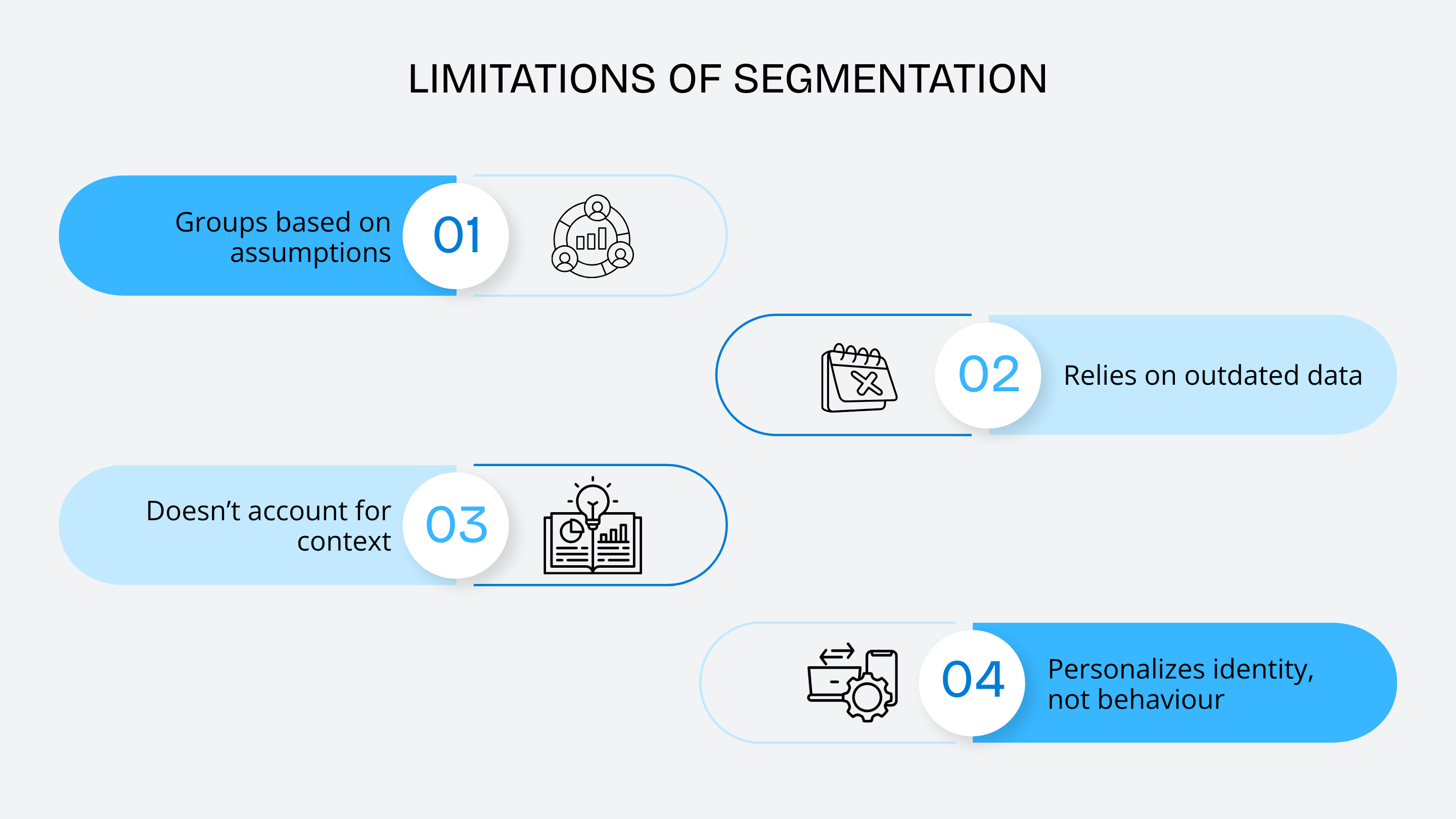
Segmentation was designed for a time when shopper behavior was slow and predictable. It worked by grouping people into categories based on who they were, and not what they were doing.
You’d tag them as “Women, 25–34,” “Repeat buyers,” “High AOV customers,” and assume everyone in that bucket wanted the same thing. The same homepage banner, the same “new arrivals” grid, the same product nudges.
The logic ran on old data: CRM lists, campaign tags, or email triggers that hadn’t changed in weeks. It never looked at what was happening in the live session.
That’s where segmentation breaks.
It can’t see context. It doesn’t register whether someone is browsing on mobile during a commute, scrolling quickly through out-of-stock items, or fixating on a specific price range. It can’t tell intent from curiosity.
So, you end up personalizing identity, and not behavior. The shopper gets treated as a data point from six months ago, not as the person standing in front of you right now.
It’s like a salesperson walking up and saying, “You bought shoes last summer, here’s more shoes,” without noticing you’re holding a jacket.
The new mindset: Personalization that reacts, not predicts
The shift from segmentation to real-time personalization is about changing how you think about every visitor.
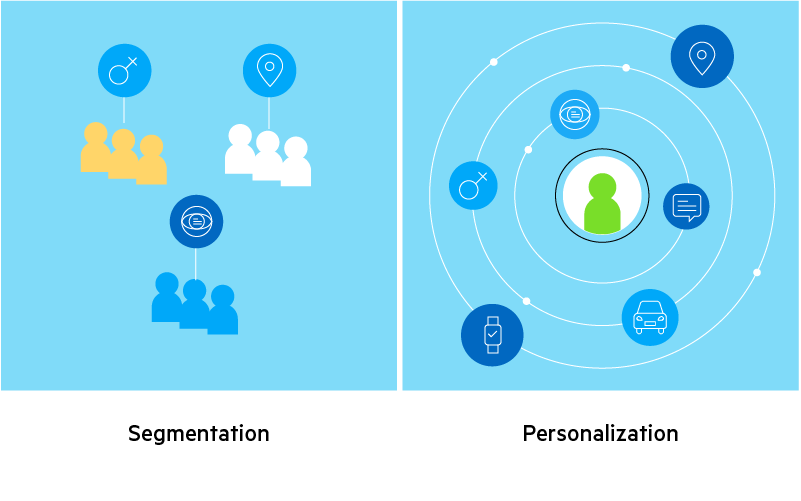
Segmentation tries to predict what someone might want based on past data. Real-time personalization reacts to what’s actually happening in the moment.
Instead of relying on static user profiles, it reads session-level context; how fast someone scrolls, which products they compare, what they skip, and where they hesitate. Every click becomes a signal, not a statistic.
For example, if someone lands from an Instagram ad for festive wear and lingers on pastel kurta sets, your homepage and PDP should instantly adapt: surfacing similar styles, colorways, and complementary pieces in that same session, not the next campaign cycle.
That’s the difference. Segmentation organizes shoppers, and real-time personalization understands what they’re doing right now.
What real-time personalization actually looks like in practice
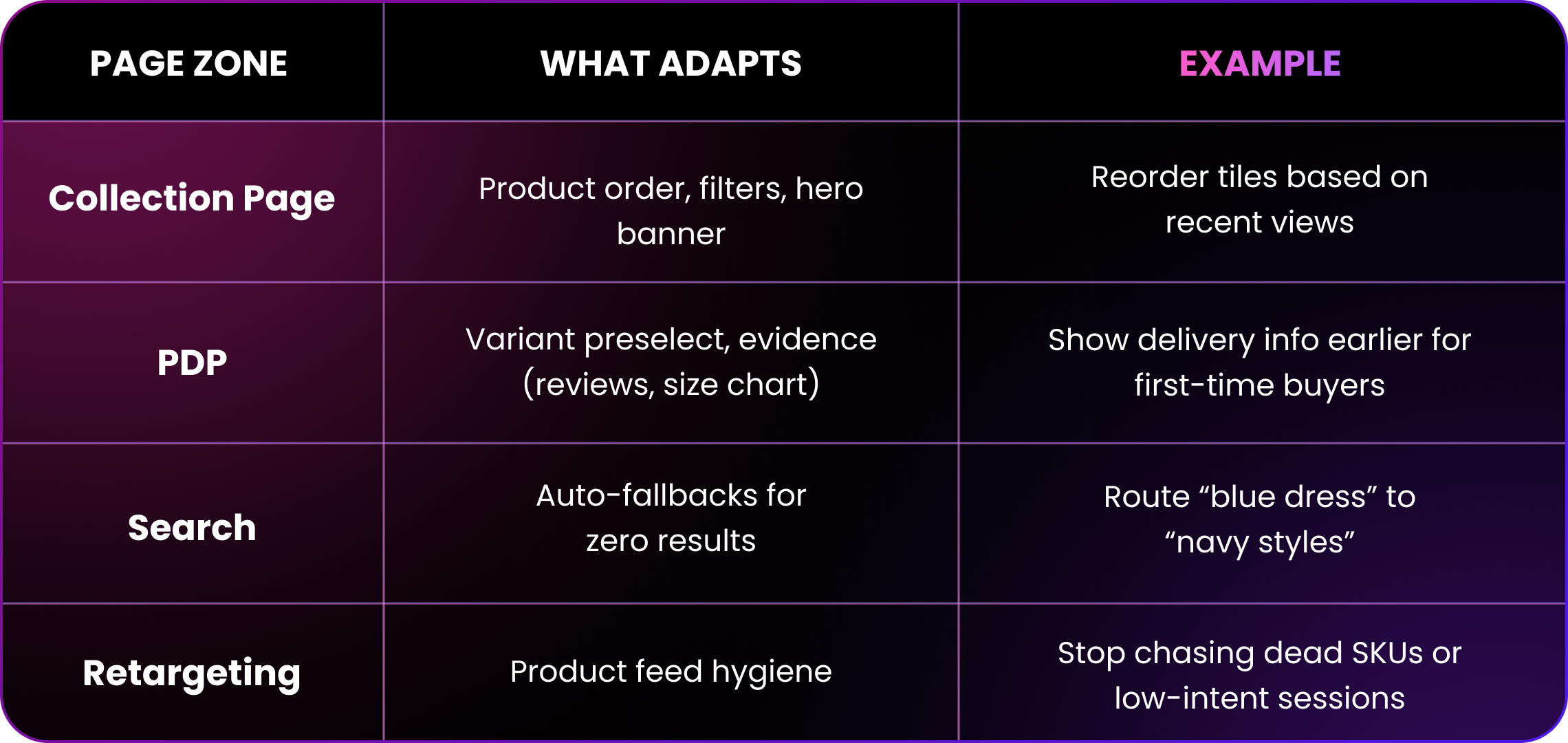
Real-time personalization isn’t abstract; instead, it’s visible in every small interaction that changes as the shopper moves through your store. It reacts quietly, in milliseconds, shaping discovery and decision without them even noticing.
Here’s what that looks like in practice:
Why this shift matters: Three compounding benefits
Real-time personalization changes how your store performs. It fixes what traditional personalization got wrong: slow reactions, wasted spend, and irrelevant experiences.
Here’s what improves when your site starts reacting live:
1. Higher relevance → faster decisions
Every shopper sees products that fit their current intent, not what worked for others. When your site reorders products, adjusts filters, and shows the right details in seconds, shoppers don’t think; they just buy. Discovery becomes instant, not effortful.
2. Cleaner data → smarter ads
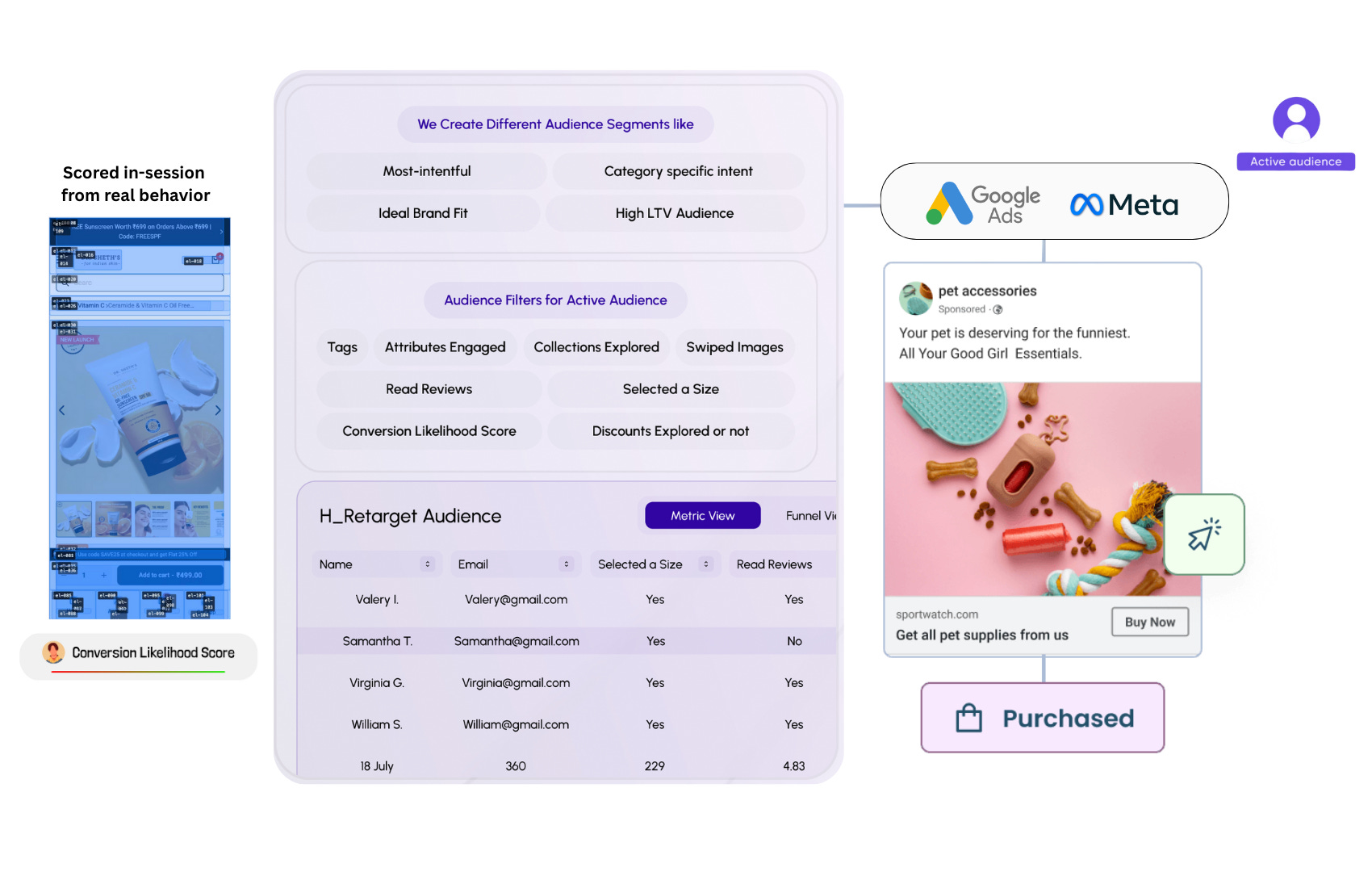
Real-time behavior creates cleaner feedback loops. Your ad platforms learn from what people actually engage with, and not from outdated traits or last month’s clicks. This means Meta and Google stop chasing window shoppers and start finding real buyers.
3. Less waste → stable revenue
By filtering out low-intent sessions and poor-performing SKUs, you stop pouring money into dead traffic. Your budgets go where they matter: high-propensity visitors and fast-moving products. The result is steadier revenue and more predictable growth.
How to move from segmentation to real-time action
Most brands already collect mountains of data. The problem is that they act on it too late. Segmentation tells you who your shopper is, and real-time personalization tells you what they’re doing right now. The goal isn’t to collect more information, but to close the gap between signal and action.
Here’s how you make that shift operational:
Step 1: Capture session-level signals that reveal intent
Start by instrumenting your store to listen in real time. Track signals that expose buying intent, and not vanity data like page views or clicks. Focus on:
Decision speed: how quickly someone moves from one product to another
Trust checks: whether they open reviews, delivery info, or size charts
Dwell patterns: how long they stay on a PDP before bouncing
Price comfort: which ranges they linger on or skip
These tell you if a visitor is deciding, comparing, or casually browsing. Once you capture these signals, you can respond within the same session instead of waiting for historical reports.
Step 2: React mid-session, not post-session
Every ecommerce team runs reports after the fact. Real-time personalization flips that order. Use behavioral logic or AI rules to adapt during the session:
If a shopper compares multiple variants, show substitutes rather than cross-sells.
If they slow down at the size chart, bring fit guidance or delivery info above the fold.
If they ignore high-price SKUs, reorder tiles in their comfort band.
The goal is to fix friction before intent fades. Each action you take inside the session protects a sale you would’ve otherwise lost.
Step 3: Clean your catalog: bad data breaks personalization
Even the best personalization fails if your base data is wrong. To solve this:
Audit your catalog weekly.
Standardize product titles, attributes, and price bands.
Tag every SKU by margin, sell-through rate, and newness.
Remove duplicates and out-of-stock items from ad feeds immediately.
Real-time systems can only react if they can trust the inputs. Clean data ensures every adaptive change (whether on-site or in ads) is grounded in reality.
Step 4: Decide what adapts automatically and what stays human
Not every decision should be left to automation. Define boundaries early so your system stays reliable:
Automate: Product order, recommendations, badges, and banners tied to inventory or location.
Keep human control: Creative tone, campaign messaging, promotional hierarchy.
When you start combining these four layers (live signals, real-time response, clean data, and smart guardrails), personalization stops being theoretical. It becomes an always-on system that learns, adapts, and sells in the same moment your shopper acts.
Conclusion: The future belongs to adaptive stores
Segmentation will always have its place, for campaigns, retargeting, and CRM. But that’s not where modern ecommerce grows anymore. Growth happens when your store feels alive: when it reads intent, reacts instantly, and changes with every visitor’s context.
That’s exactly where Helium comes in. Helium helps brands move from static segmentation to real-time action.
Its engine listens at the session level—tracking over 20+ live behavioral signals like scroll depth, decision speed, price comfort, and trust checks. These signals are then used to adapt the experience in the moment: reorder product grids, surface relevant evidence, or tweak PDP layouts, all within the same session.
Want to see how adaptive stores actually work? Book a demo to see how Helium can help you detect live buyer intent and act on it in real time.