
How Sudathi Lifted Conversions by 25% and Cut CAC With Helium
See how Sudathi used Helium’s Pulse and Curator to improve discovery, lift AOV with smarter cross-sells, and cut CAC by up to 5× through quality-weighted retargeting.

Most affordable fashion brands drive huge traffic through social ads, but lose money when those visitors can’t find the right product fast enough. Long discovery times, irrelevant catalog ordering, and broad retargeting drive up CAC and cap revenue.
Sudathi, a fast-growing affordable saree brand, faced this exact problem. Their catalog featured hundreds of Banarasi, Paithani, and Kanjivaram sarees with different fabrics, drapes, and price bands. Without session-level personalisation, shoppers often felt overwhelmed and missed accessories like blouses or shapewear that could lift order value.
By implementing Helium’s Pulse (visitor intelligence) and Curator (adaptive merchandising), Sudathi was able to shorten discovery time, surface the right complements, and focus ad spend only on high-quality cohorts. The results:
A 25% uplift in conversion rates on treated traffic.
Lower CAC by up to 5× through quality-weighted retargeting.
Better attach rates for essentials like blouses and shapewear.
Meta ROAS doubled from 5× to 10× with the same budget.
“In high-SKU categories like sarees, discovery speed makes or breaks conversions. With Helium, Sudathi shortened time-to-first-relevant product, lifted conversions by 25%, and improved ad efficiency — all without adding extra work for their team.”
About the brand
Sudathi, founded in Surat in 2023, sells affordable sarees online with price points between ₹599–₹1,699. Its catalog includes Banarasi, Paithani, Kanjivaram, woven/printed, and ready-to-wear sarees.
The brand scaled rapidly after appearing on Shark Tank India S4, where it raised ₹1 crore for a 4% stake from Anupam Mittal, Peyush Bansal, and Aman Gupta. With over 8.5 lakh app downloads and a growing audience of value-seeking shoppers across India, Sudathi has become a go-to destination for festive and everyday sarees.

Irrelevant browsing experience
Occasion and budget intent weren’t inferred in the first few clicks. This meant wedding shoppers saw casual prints, while daily-wear buyers saw ornate silks. The mismatch depressed conversion rates and hurt repeat propensity.
“We noticed that new shoppers often struggled to find the right fit early enough, and repeat buyers didn’t always see continuity between campaigns and product discovery.”
Missed attach opportunities
Blouses and shapewear—stocked under “Essentials”—weren’t surfaced contextually. Without nudges, shoppers often checked out with just a saree, leaving attached revenue untapped.
Retargeting waste
Sudathi’s ads chased all site visitors equally. Low-intent users inflated costs, while high-quality visitors weren’t prioritised. ROAS was dragged down, and CAC crept higher with each campaign.
“We knew we were leaving money on the table, but without session-level personalisation, there was no way to fix it.”
Solution: How Sudathi Implemented Session-Level Personalisation With Helium
Sudathi used Pulse (visitor intelligence) and Curator (adaptive merchandising) to fix discovery, improve attach rates, and reduce wasted ad spend. Instead of generic catalog sequencing, they layered intent signals into merchandising and campaigns. Here’s how they did it step by step:
Step 1: Scoring session quality with Helium Pulse
Before: Every visitor was retargeted, whether or not they showed buying intent. This inflated CAC and wasted ad impressions.
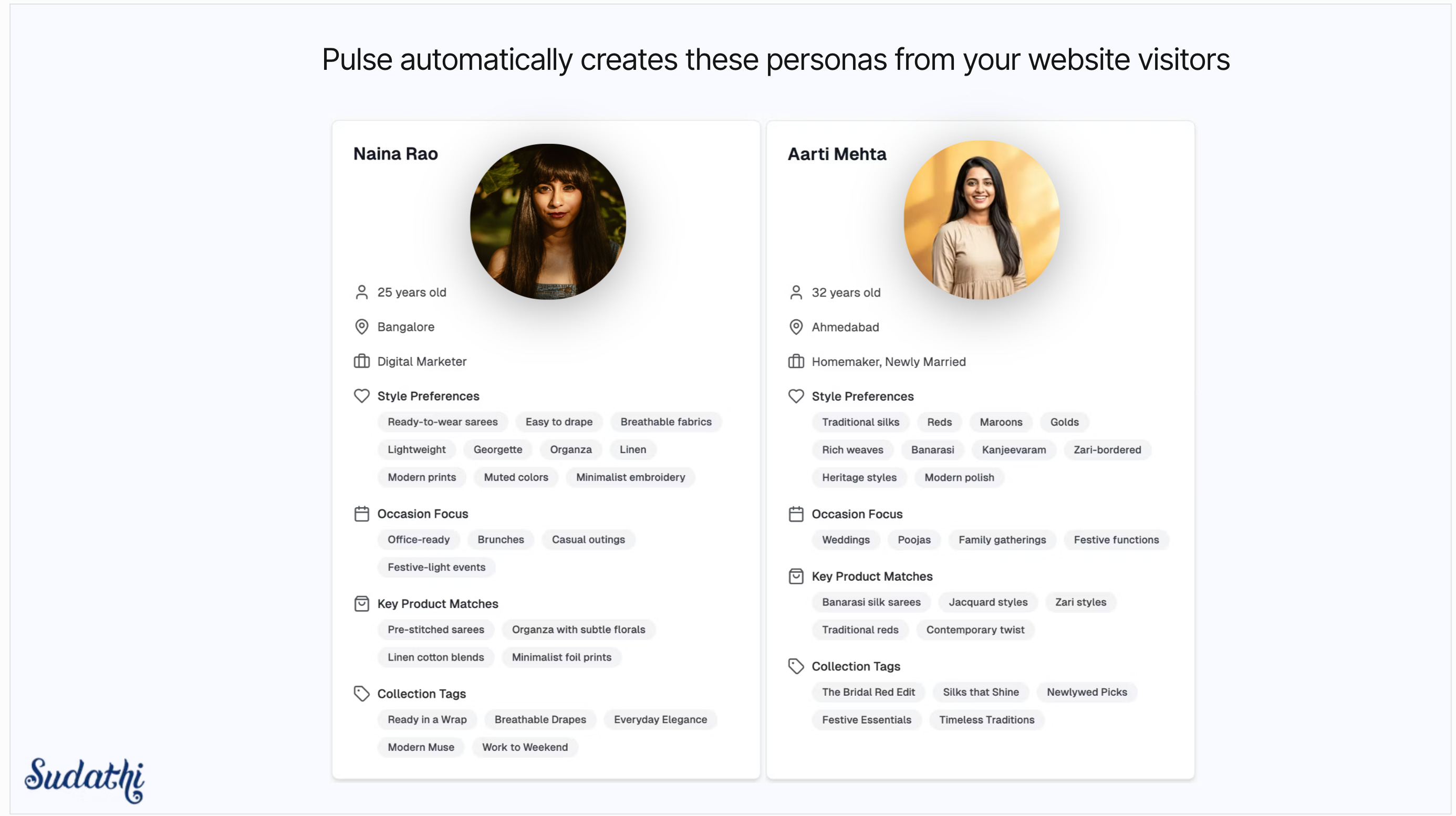
Pulse tracked 20+ visitor signals, including city, device tier, scroll behaviour, time spent, price sensitivity, and product views. Based on these, it assigned each session a conversion-likelihood score:
High-intent sessions (likelihood >80%) were pushed into Meta and Google for retargeting.
Low-propensity sessions were suppressed, saving spend.
After: Retargeting lists focused only on high-quality visitors. CAC dropped by up to 5× in pilot runs.
Step 2: Re-ranking collections basis personas
Before: New visitors scrolling through high-SKU categories (like 200+ sarees) often exited before finding a relevant product.
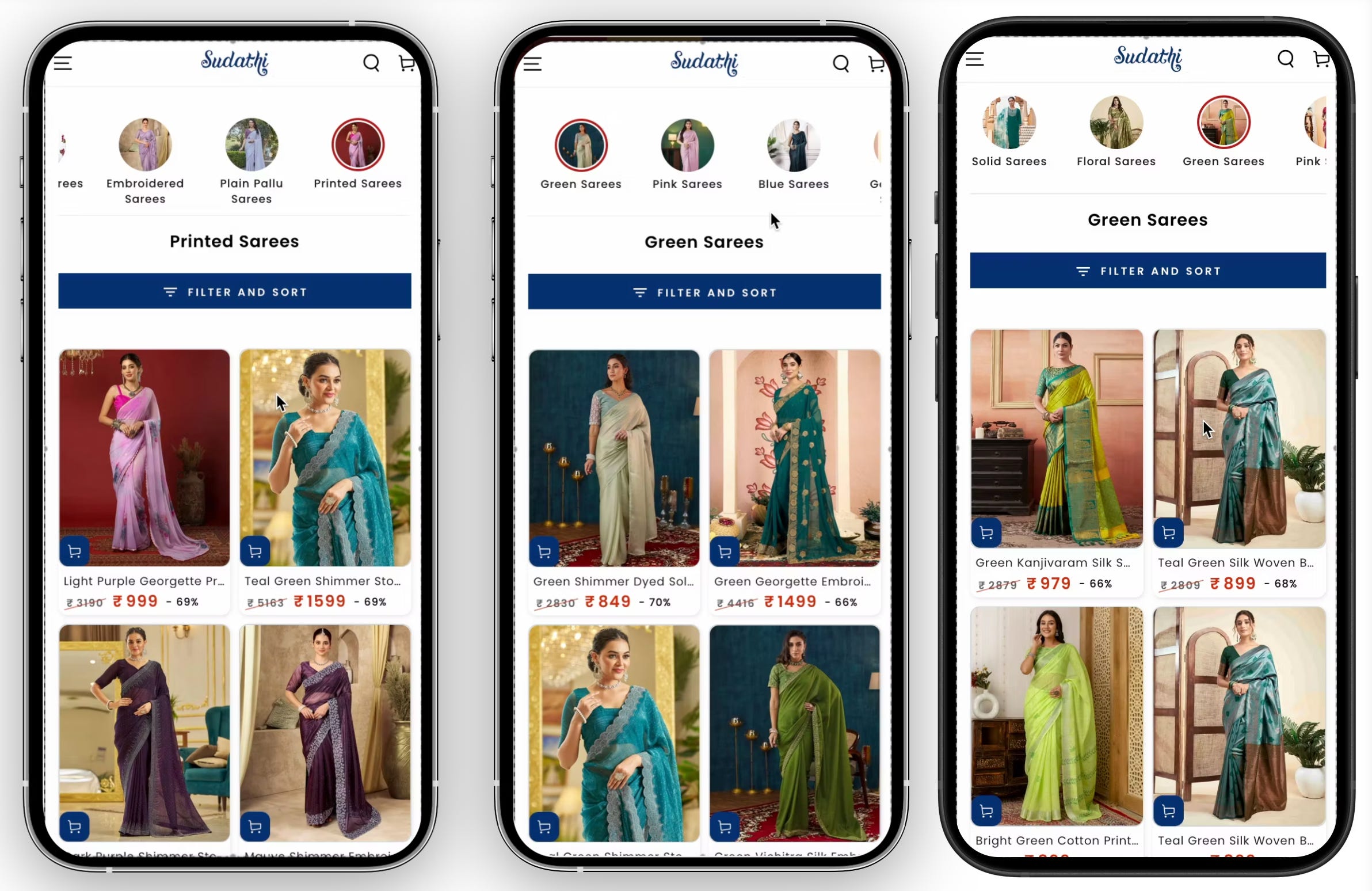
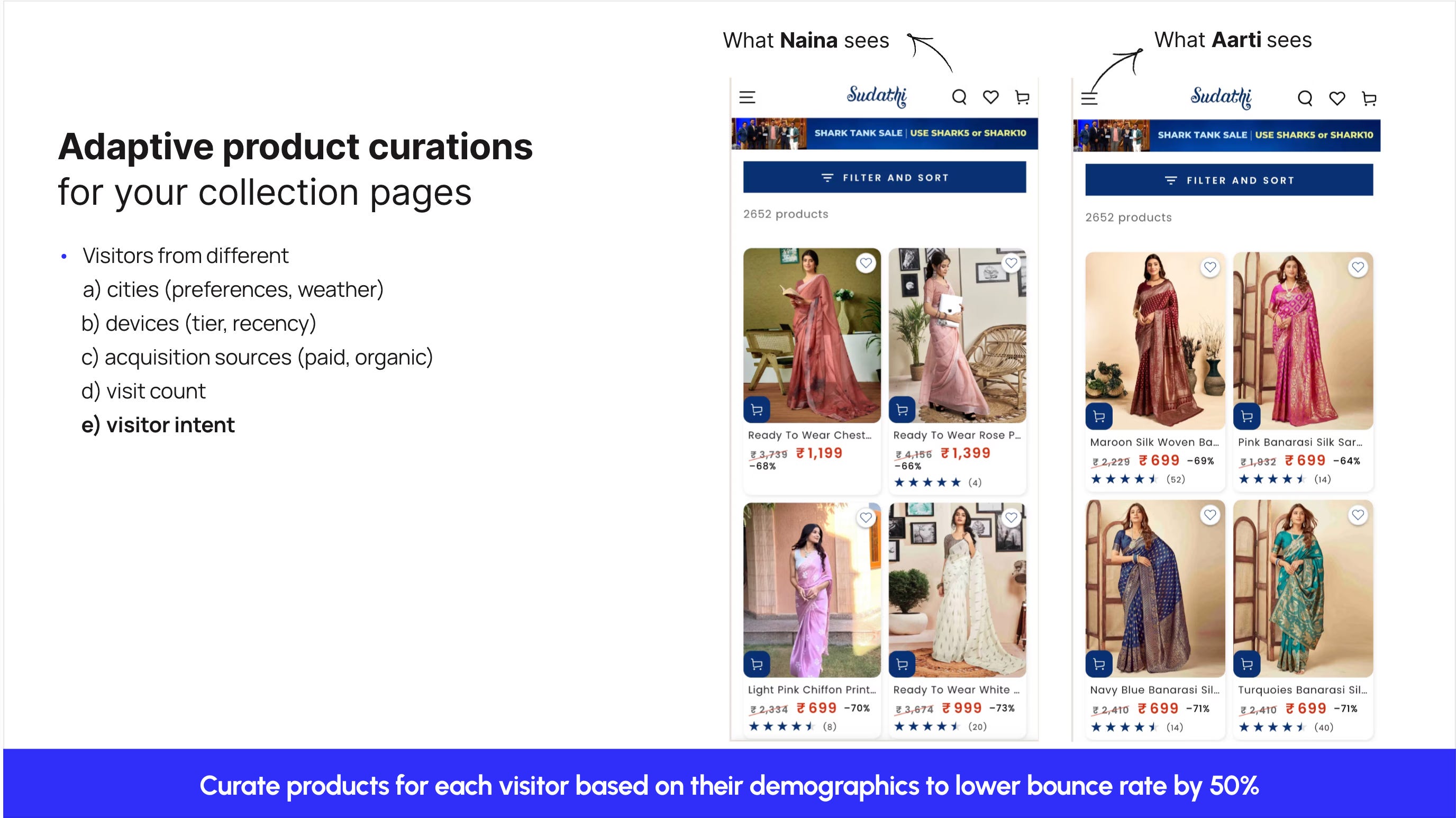
Helium re-ranked collections dynamically:
Pinned festival edits (like Saree Saturday or Mouni Roy Edit) for cohorts showing occasion intent.
Elevated affordable printed sarees for budget-conscious shoppers.
Prioritised relevant fabrics (Banarasi vs lightweight cottons) based on first 1–3 clicks.
After: Visitors reached a relevant saree faster. On 40% of the traffic treated, conversion rates lifted by 25%.
Step 3: Adding contextual PDP nudges
Before: Essentials like blouses and shapewear sat in a separate “Essentials” tab. Shoppers rarely saw them during checkout, capping AOV.
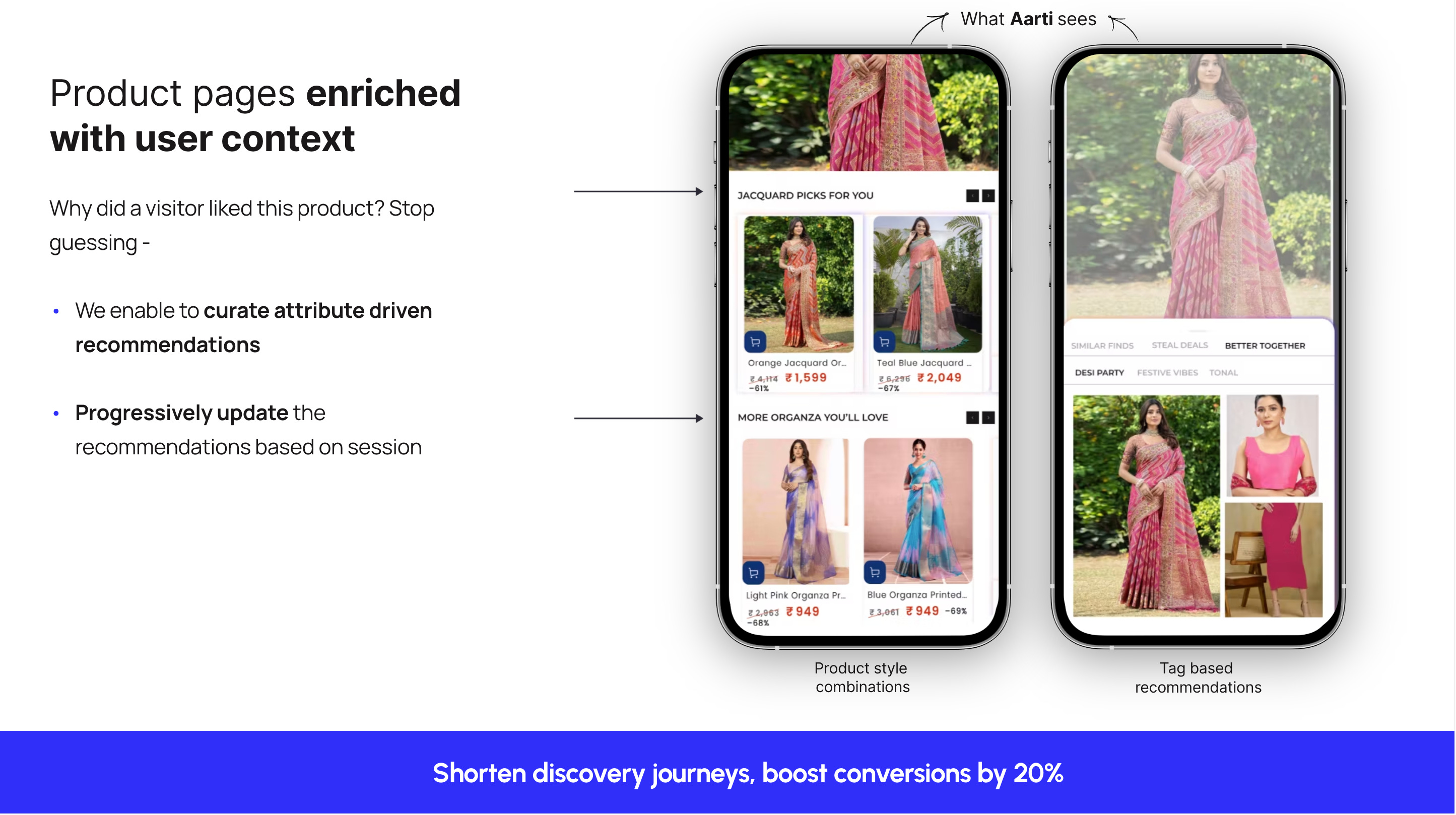
Curator introduced “complete-the-look” recommendations directly on PDPs:
For heavier sarees, shoppers were nudged toward compatible blouses.
For lighter or complex drapes, shapewear suggestions appeared near the CTA button.
After: Attach rates improved because essentials were suggested exactly when they were needed, not buried elsewhere.
“We didn’t need to generate new demand — we already had visitors coming in. Helium helped us act on their intent in real time.”
Step 4: Optimising product feeds with Helium Pulse
Before: Ads promoted poor-performing or out-of-stock SKUs, wasting spend and lowering ROAS.
Pulse analysed catalog performance using an ACOS × traffic quadrant model:
SKUs with high spend but low returns were automatically suppressed.
Alerts were triggered when >50% of variants were out of stock.
After: Only high-quality products entered paid feeds, giving Sudathi a cleaner campaign delivery and stronger ROAS.
Instead of redesigning their site, Sudathi layered Helium’s Pulse and Curator onto their existing Shopify stack. Each step—intent scoring, re-ranking, contextual nudges, and feed optimisation—directly addressed lost revenue opportunities and turned them into measurable lifts.
Results: Higher conversions, larger baskets, and efficient spend
By layering Helium into their existing stack, Sudathi was able to convert more traffic without increasing ad spend.
Here’s what the results looked like:
25% uplift in conversion rates on 40% of treated traffic. Faster discovery and intent-aware ranking meant shoppers found the right sarees in fewer clicks.
5X reduction in CAC from quality-weighted retargeting. By only re-engaging sessions with >80% conversion likelihood, Sudathi cut wasted impressions.
Stronger attach rates from contextual PDP nudges. Blouses and shapewear were added more frequently, growing average basket sizes.
Better campaign efficiency with feed optimisation. Suppressing low-performing SKUs gave Sudathi tighter control and cleaner campaign delivery.
2× stronger ROAS potential. The brand doubled its Meta ROAS from 5× to 10× with the same budget, proving the impact of high-intent targeting.
“For sarees, relevance in the first few clicks decides the sale. With Helium, Sudathi not only improved conversion but also unlocked repeat demand and more efficient acquisition.”
Ready to Lift Conversions and Cut CAC Without More Ad Spend?
Most ecommerce brands keep boosting ad spend but still see ROAS stuck between 3× and 5×. The problem isn’t the budget, but targeting.
When you know who’s actually ready to buy, every ad, feed, and retargeting list becomes sharper. Helium’s session-level personalisation helps you:
Identify and re-engage only high-intent sessions.
Cut CAC by 5× through quality-weighted retargeting.
Increase conversion rates by personalising discovery in real time.
Optimise Meta and Google feeds to focus on SKUs that truly convert.
Leading brands like Sudathi use Helium’s Pulse and Curator to turn existing traffic into higher conversion and lower CAC without redesigning their site or offering discounts.
If you’re ready to convert more visitors and achieve 2× ROAS with the same budget, Helium helps you make every session count.