
Valentine’s Day 2026: how Indian D2C brands can make shoppers spend more (without going discount-crazy)
A step-by-step Valentine’s plan to lift AOV and what Myntra M-Now, Nykaa, Bella Vita etc reveal about how Indians buy gifts now.

Every year, Valentine’s Day shows up on the DTC calendar with the same surface-level questions:
“What offer should we run?”
“How much discount is expected?”
“What creative angle will work?”
But the brands that quietly outperform during Valentine’s week are usually not asking those questions at all.
If your plan is “15–25% off + pink creatives,” you’re taking the lazy route. You’ll get volume, sure. You’ll also get crushed on margin and ad costs (and you’ll train customers to wait).
So the job for a D2C brand is not “run a sale.”
The job is: make gifting feel low-effort and high-certainty.
We checked live Valentine gifting setups across Indian ecommerce sites in late Jan 2026. The common pattern is simple:
They don’t sell “items.” They sell “finished choices.”
That’s why you keep seeing dedicated gift shelves and gift-set heavy listings.A recurring pattern across winning DTC brands: “complete the gift”
This shows up in different ways across categories. Now let’s turn that into a reusable system you can run every gifting moment (Valentine, Rakhi, weddings, Diwali).
The “Complete the Gift” system (7 store moves you can ship fast)
1) Build a Gift Hub with 3 obvious paths
Goal: make the first click feel easy.
Do this:
One landing page with three big buttons:
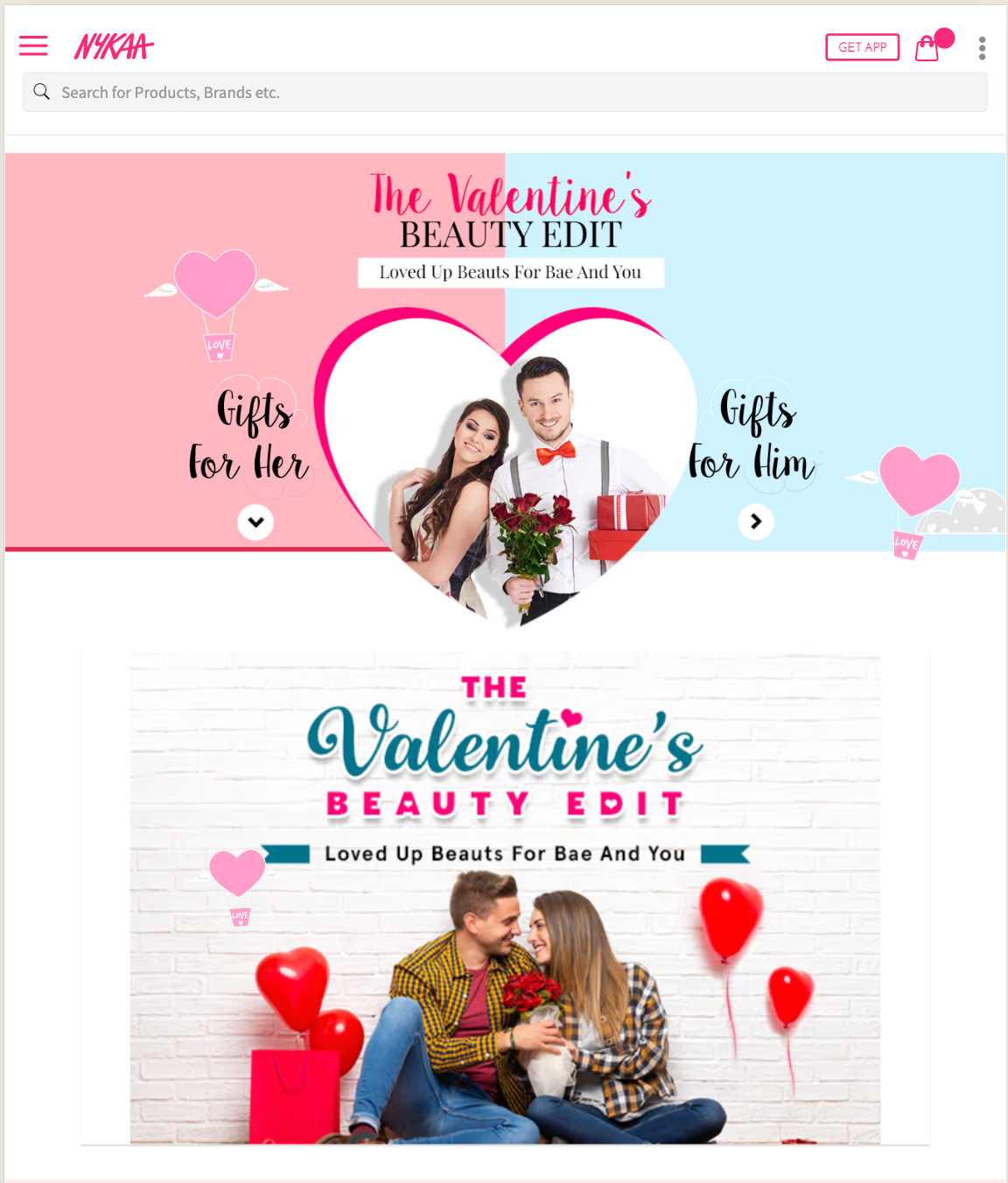
Gifts for her
Gifts for him
Gifts for “I don’t know” (safe picks)
Copy it from real stores:
Nykaa built a dedicated Valentine store to reduce the number of decisions a shopper has to make.
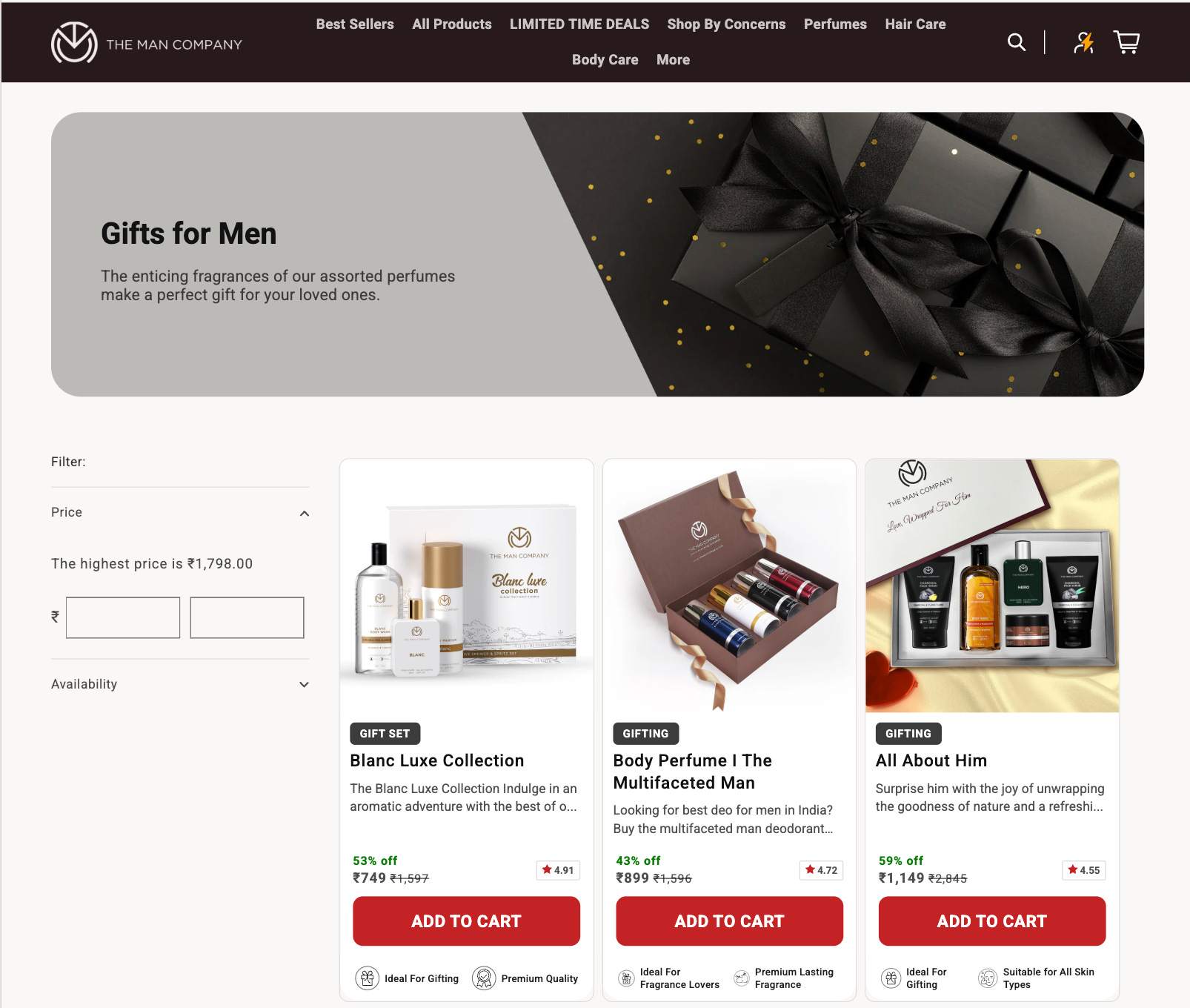
The Man Company uses a dedicated Valentine collection that’s already “gift-first.”
Minimum filters that matter:
Budget: under ₹499 / ₹999 / ₹1499 / ₹2499 / ₹3999
“Safe” picks: bestsellers, high rating, low return risk
Occasion style: romantic / cute / practical (keep it 3, not 12)
2) Reduce choice by selling “sets,” not singles
Goal: raise cart value without discount spam.
Do this:
Create 6–10 pre-made sets (not 50).
Name them like outcomes, not SKUs:
“Date Night Ready”
“Office Crush Safe”
“Smells Expensive”
“Small but Thoughtful”
Real store pattern:
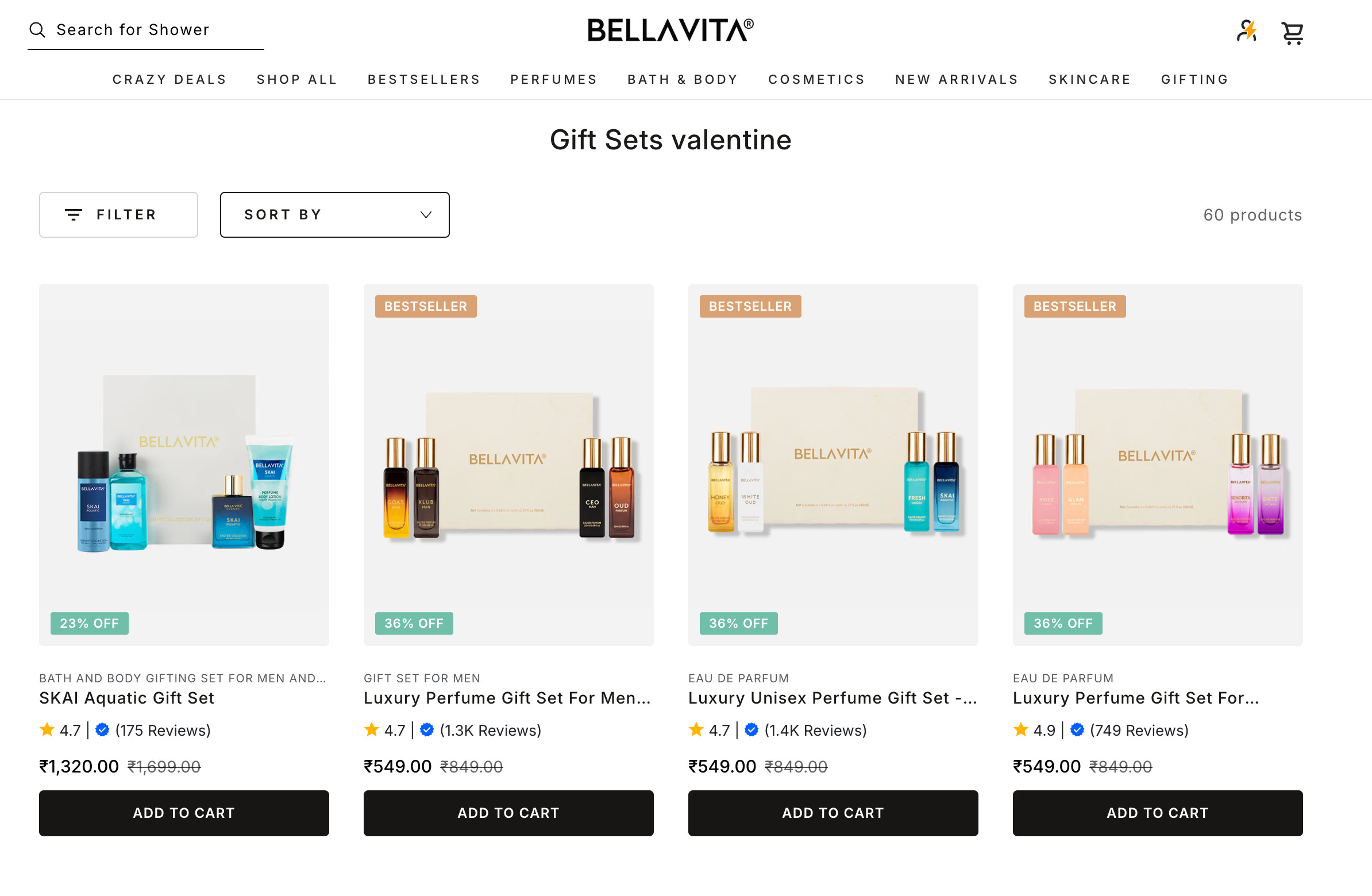
Bella Vita’s Valentine collection is literally structured around gift sets and kit-like items (with product type filters that push you into sets).
Set design rule (works across categories):
Hero item (the “main gift”)
Support item (the “makes it feel complete”)
Small close (mini, card, pouch, sample)
That third piece is what makes it feel like a “gift,” not “I bought you a thing.”
3) Make the second item feel safe (low-risk add-ons)
Goal: stop the “one item cart.”
People don’t add the second item because it feels like a second decision.
Do this:
Add 3 add-ons that are hard to regret:
gift note/card
travel size / mini
pouch / case / small accessory
Real store pattern:
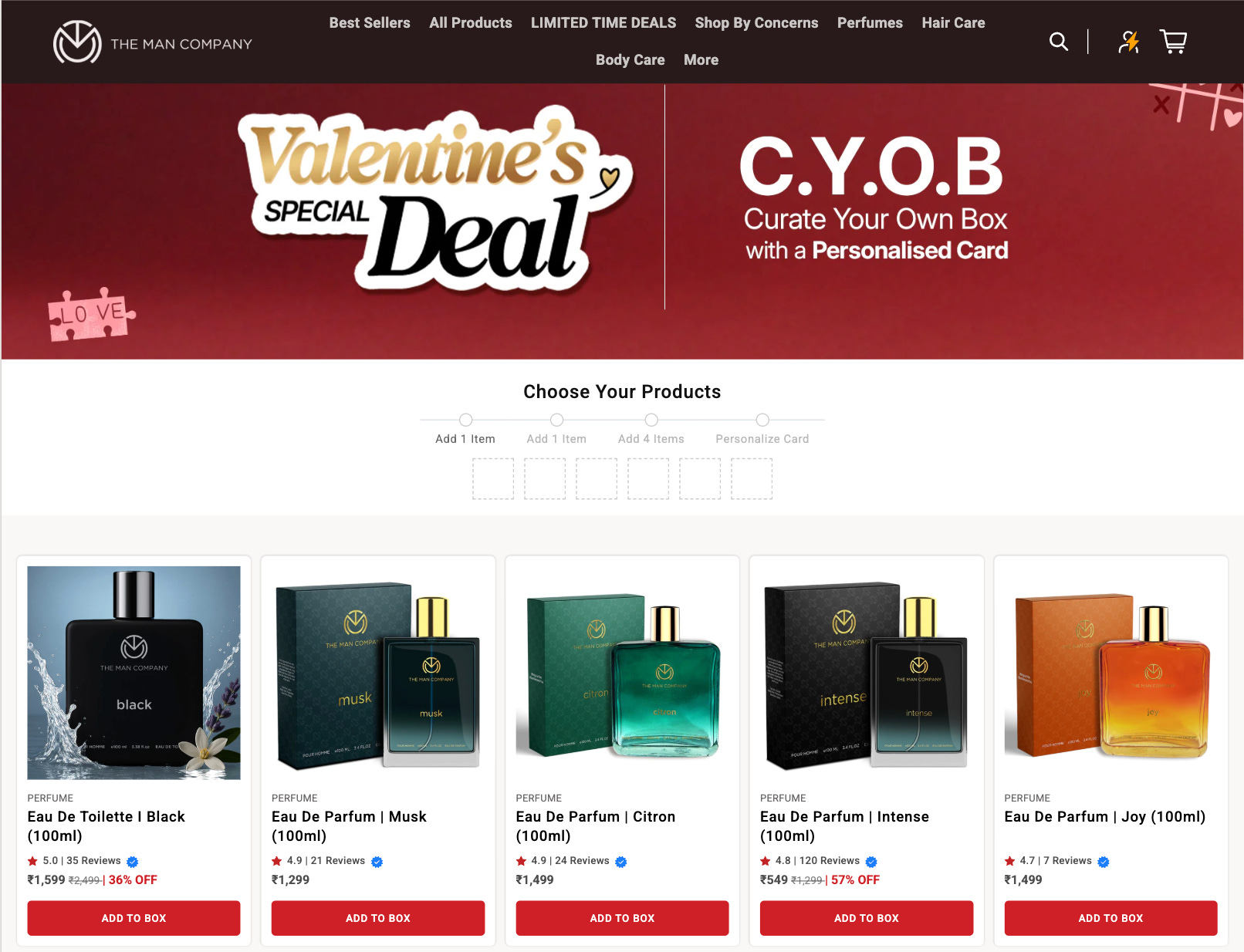
Gift sets and kits do this for you automatically (Bella Vita, The Man Company, mCaffeine).
Cart UI tweak:
Add a “Finish the gift” panel in cart:
“Add a note (30s)”
“Add a mini”
“Add gift wrap”
“Ship faster”
Don’t hide this in a drawer
4) Put delivery certainty above the fold (or you lose the gift buyer)
Goal: remove the “will it reach in time?” panic.
Do this:
Show:
delivery ETA by pincode (not vague “ships in 24h”)
return window in one line
exchange promise for size (fashion)
Even a small doubt kills gift conversion.
How to implement fast:
Add a sticky “Arrives by: ___” module on PDP once pincode is entered.
Add a Valentine cutoff note:
“Order by Feb 10 for delivery by Feb 14 in metro cities” (your ops team will give real dates)
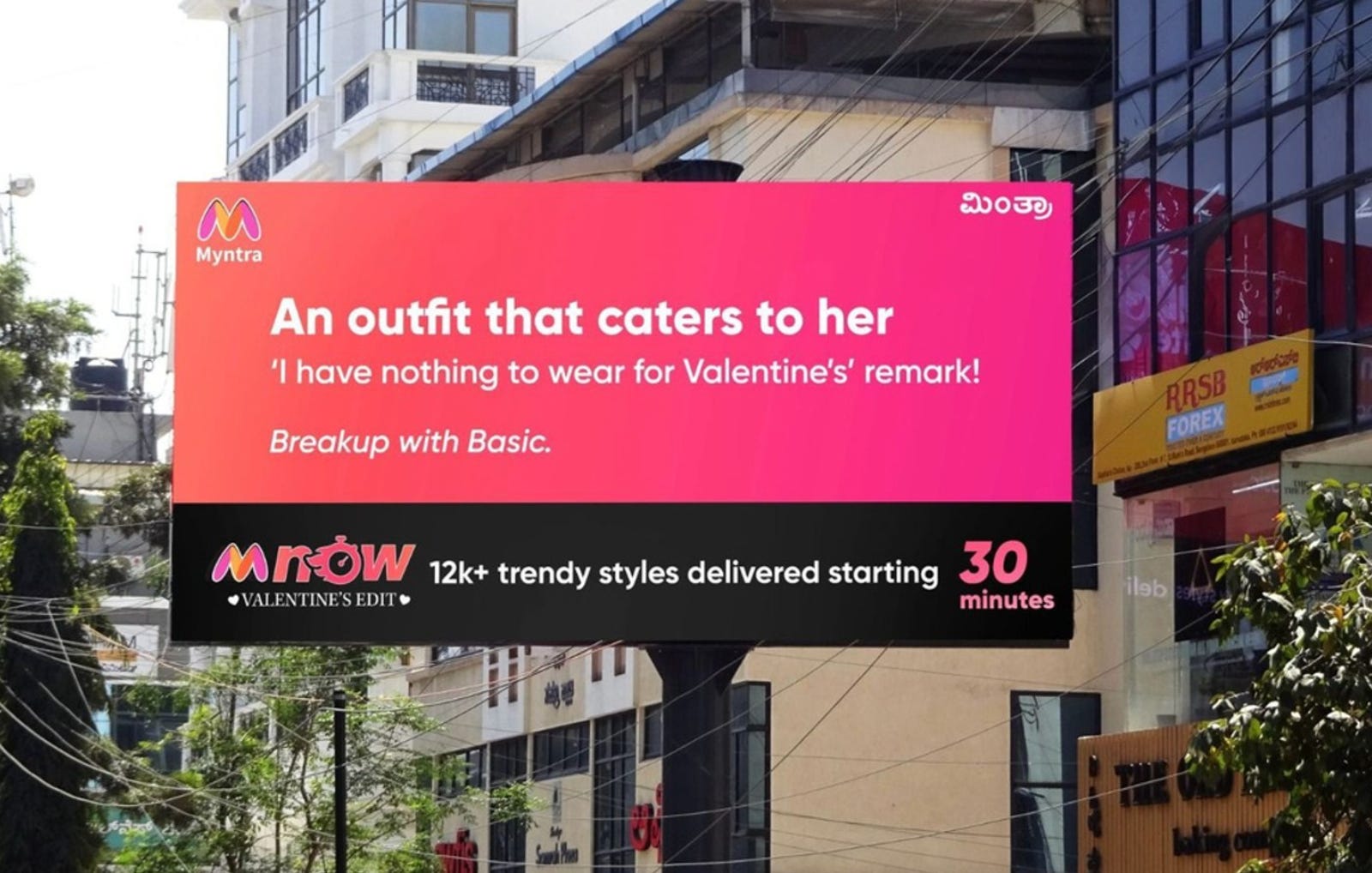
Myntra’s whole Valentine push was basically: premium gifts, delivered fast, for last-minute shoppers.
5) Add “gift guardrails” on PDP (so buyers stop second-guessing)
Gift buyers want reassurance, not more romance copy.
Do this on PDP:
“Who is this for?” (3 bullets)
“When it works best” (3 bullets)
“If you’re confused, pick this” (1 safe default)
Size/fit help (fashion), scent profile help (perfume), shade help (beauty)
Real store pattern you can see:
The Man Company pages lean heavily into “gift for him” framing and gift box language.
6) Use discounts like a scalpel, not a hammer
You said “no discount-crazy.” Good. But don’t pretend offers don’t matter.
Do this instead:
Use cart-value thresholds (protect AOV):
“Spend ₹X, get Y”
Use bundle pricing (value feels higher without ruining anchor price)
Use free add-ons (note, sample, mini) over flat % off
Real store pattern:
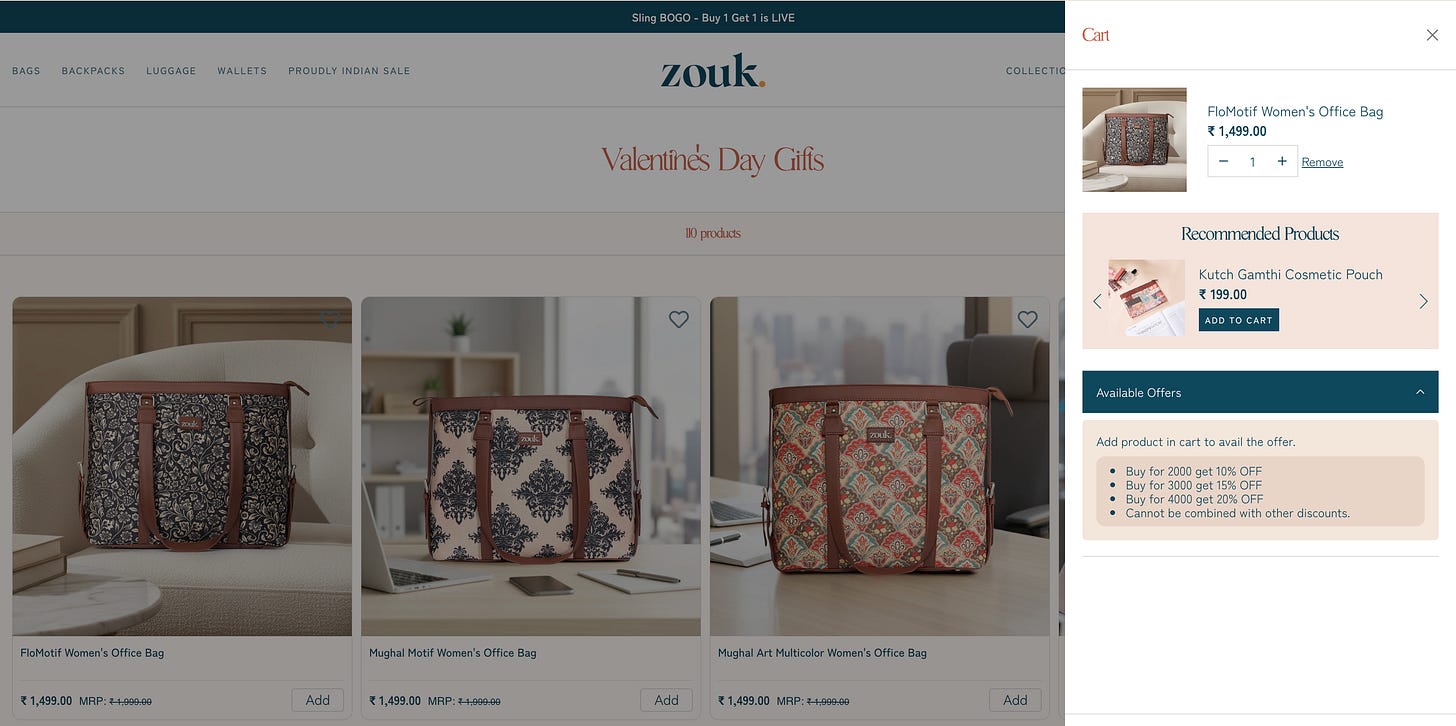
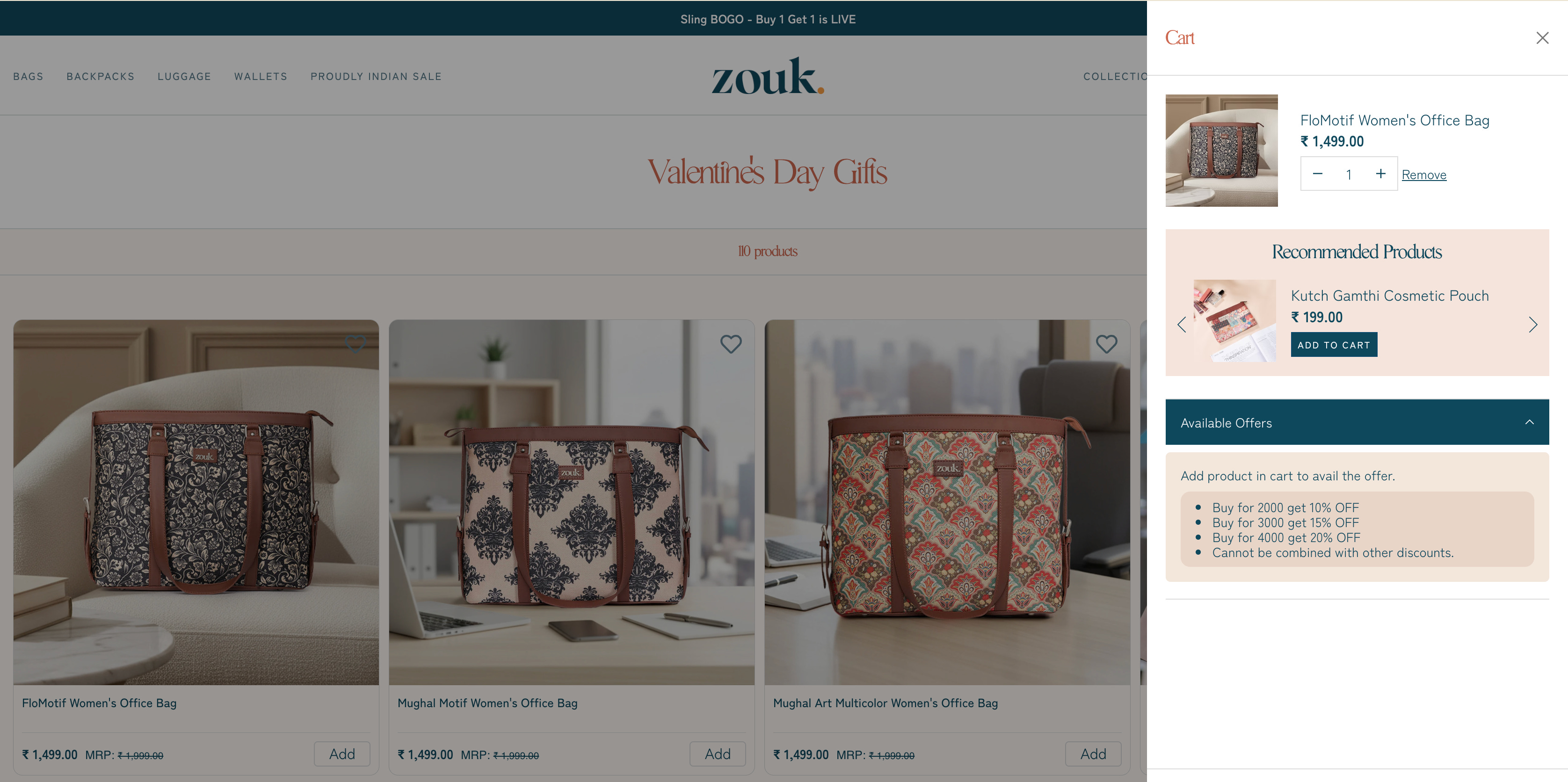
Zouk’s Valentine collection shows cart-value offer tiers right on the page.
Measurement: how you’ll know this is working (before the week ends)
If you don’t measure the right things, Valentine week tricks you.
Traffic rises, orders move, and you still don’t know if shoppers felt more certain or if you just bought volume with margin.
This is the measurement checklist to run daily from Feb 7–14, 2026.
Set a clean baseline (so you don’t lie to yourself)
Compare Valentine week against:
the same weekdays in the prior 2 weeks
and the same device split
Your baseline metrics live in Shopify’s funnel and sales reports (sessions → add to cart → checkout → purchase, and AOV / discounts).
The 30-minute Valentine store checklist
Do I have a Gift Hub with 3 paths?
Are there clear budget shelves (₹499/₹999/₹1499/₹2499)?
Do I sell 6–10 gift sets that feel “finished”?
Can a buyer find gift sets from nav in 1 click?
Does PDP answer “who is this for” in 5 seconds?
Is delivery ETA obvious after pincode?
Is the Valentine cutoff date visible?
Are returns/exchanges stated in one clean line?
Does cart have a “finish the gift” panel?
Do I push low-risk add-ons (note, mini, pouch)?
Do I show “safe picks” (bestsellers, high rating) upfront like a filter? (Nykaa does this by stacking common filters incl. rating and occasion.)
Are offers tied to AOV (not random % off)?
Big carts don’t come from bigger % off. They come from fewer doubts. Make gifting feel done in 60 seconds. That’s the whole game.